Dealing at home
How to deal poker
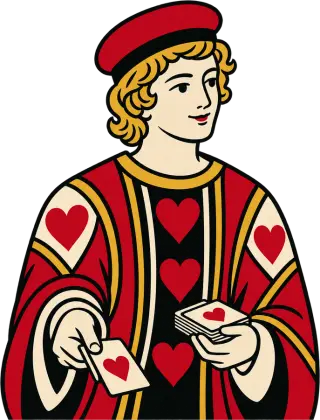
To deal Texas Hold'em, shuffle, let the player on your right cut, then deal one card at a time, face down and clockwise, starting with the player on your left, until everyone has two. Then burn one card and turn three for the flop, burn one and turn the turn, and burn one more and turn the river.
That's the whole job. Below: who deals, the order the cards go around the table, what to do with the pot, and how to fix it when a card flips over or someone ends up with three.
Who deals
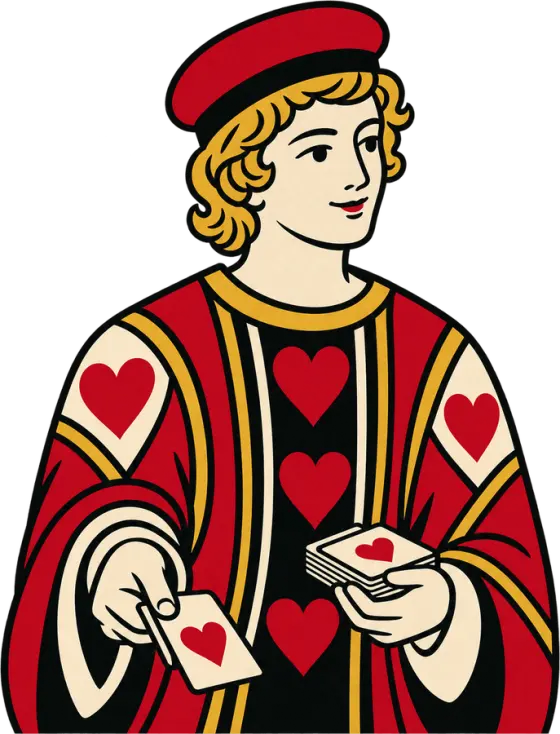
Whoever has the button. In a home game the dealer is usually one of the players, and the button, a disk or any small object, sits in front of them and says so.
-
The first hand
Deal one card face up to everyone. The highest card takes the button. If two players tie, suits break it, in the order spades, hearts, diamonds, clubs. It's the only moment in poker when a suit outranks another.
-
The blinds go in first
Before any card is dealt, the player to the dealer's left posts the small blind and the next player the big blind. The deal then starts with the small blind.
-
Then the button moves
After every hand the button moves one seat to the left, and the blinds move with it. If one person deals all night, the button still moves: what rotates is the seat that acts last, not the chore.
Hosting the game: blinds, chips and house rules How many chips each player gets
The deal, card by card
Six players, you on the button. The first card goes to the small blind, on your left, and the deal goes around clockwise, one card each, twice. You get the last card, the twelfth.
- One card at a time, never two to the same player in a row.
- Keep the cards low and slide them across the table. A card pitched high in the air is a card someone sees.
- Face down, and nobody touches their cards until they're all dealt.
Step by step
One hand of Texas Hold'em, from the shuffle to passing the button. The betting in between belongs to the players; the dealer just keeps it in order.
-
1
Shuffle
Riffle the deck several times, keeping the cards low and face down. Mathematicians Dave Bayer and Persi Diaconis showed that it takes about seven riffle shuffles to mix a 52-card deck well. Three or four leaves a lot of the old order.
-
2
Offer the cut
Set the deck in front of the player on your right. They lift the top part and set it down beside the rest, and you put the bottom part on top. A blank cut card under the deck keeps the bottom card from being seen.
-
3
Deal the hole cards
One card at a time, face down, clockwise, starting with the small blind on your left. Two full rounds, and the button gets the last card.
-
4
Let the preflop betting run
The player to the left of the big blind acts first, and everyone acts in turn. The round ends when everyone still in has put in the same amount. Don't touch the deck until it does.
-
5
Burn and flop
Take the top card and put it aside face down: that's the burn card. Then turn the next three face up together in the center of the table. That's the flop.
-
6
Burn and turn
When the betting on the flop is over, burn one more and turn one card face up beside the flop. That's the turn.
-
7
Burn and river
After the betting on the turn, burn again and turn the fifth and last card, the river. Three burns in all, one before each batch of board cards.
-
8
Gather the pot
Bets stay in front of each player until the round ends, then you sweep them into the pot. Chips tossed straight into the pot can't be counted, so ask for them in front first. If anyone asks how big the pot is, count it.
-
9
Push the pot and pass the button
At the showdown the cards speak: to win, a player shows both cards face up. Push the pot to the winner; a tied pot is split, and an odd chip goes to the winner sitting closest to the button's left. Then gather every card, burns included, and move the button.
When it goes wrong
Card rooms settle these with written rules. The ones below follow Robert's Rules of Poker, the rulebook many card rooms base their own on. At home, agree before the first hand that these are the rules, and the argument is over before it starts.
-
A card flips over during the deal
If it's the first or second card of the deal, it's a misdeal: gather the cards, reshuffle, cut and deal again. Any later card flipped by the dealer doesn't stop the deal. Finish dealing, give that player the next card off the top, and the exposed card becomes the first burn card.
-
A misdeal
Two or more cards exposed by the dealer, the first card to the wrong seat, the button in the wrong place, or a player dealt in or left out by mistake: reshuffle and deal again. It has to be called before two players have acted. After that, the hand is played out.
-
Someone gets a third card
If the first player to the dealer's left ends up with one card too many after everyone has two, that card goes back on the deck and becomes the burn card. More than one extra card is a misdeal.
-
No burn, or two burns
Fix it if nobody has acted on the new card yet. The cards that follow should be the ones that would have come if the burn had been right. Once someone has acted on a board card, it stands.
-
The flop or the turn comes out too early
A flop dealt before the betting ends goes back into the deck, which is shuffled and cut; the burn card stays out. A turn dealt early is set aside, the next card becomes the turn, and the set-aside card is shuffled back in before the river.
-
A joker, or two identical cards
A joker in a game that doesn't use them is a scrap of paper: it's replaced by the next card and the hand goes on. Two identical cards mean two decks got mixed: the hand is void and everyone takes back what they bet.
Dealing FAQ
Who deals first in poker?
Deal one card face up to each player; the highest card deals first. Ties are broken by suit: spades, hearts, diamonds, clubs. After that, the deal moves one seat to the left every hand.
Do you deal to the left or the right in poker?
To the left. The deal goes clockwise, starting with the player on the dealer's left (the small blind), one card at a time, and the dealer gets the last card.
Why do you burn cards in poker?
So nobody can get an edge from the top card of the deck, if it was flashed during the deal or has a mark on its back. The burn card goes face down and never plays.
How many cards do you burn in Texas Hold'em?
Three: one before the flop, one before the turn and one before the river. No card is burned before the hole cards.
What happens if the dealer flips a card?
If it's the first or second card of the deal, it's a misdeal and the hand is reshuffled and dealt again. A later hole card exposed by the dealer is replaced with the next card once everyone has two, and it becomes the first burn card. Two exposed cards are a misdeal.
Does the dealer play in a home game?
Usually, yes. At home the dealer is a player like everyone else, and the button marks their seat. If one person deals all night without playing, the button keeps moving anyway, because it marks who acts last.

Learn the game you deal
Reading how to deal takes five minutes; dealing smoothly with six people watching comes easier once you know the game. The course starts with the cards and gets to dealing in path 3, “Playing with friends”: from the right seat, one card per round, with a burn before each street.
First lesson · 6 min The cards Every card has two facts: rank and suit. You'll learn to read both, and which one says which card is worth more. Play nowNo sign-up · No money · In your browser