For people who already play cards
From the Spanish deck to poker
If you play mus, tute or brisca, you are not starting from zero: you are starting ahead. There are eight things to change, and none of them is difficult. The difficulty is that all eight are things you currently know backwards, and knowing something backwards shows more than not knowing it at all.
None of the eight is your fault. Every one of them is the correct answer to a different game, which is exactly why they come out by themselves.
What you already have, and it counts
Before the differences, the things that do not change. You arrive with three habits that take an absolute beginner months to build.
- You look at the person opposite, not only at your own cards. In poker that is called reading the other player and it is half the game.
- You work out what somebody can be holding from what they have done. That is precisely the muscle poker uses most.
- You know what a bluff is and that it exists. Plenty of people arrive at poker unable to believe you can bet with nothing.
The eight that change
-
What you bring
The deck has a jack, a knight and a king
What happens here
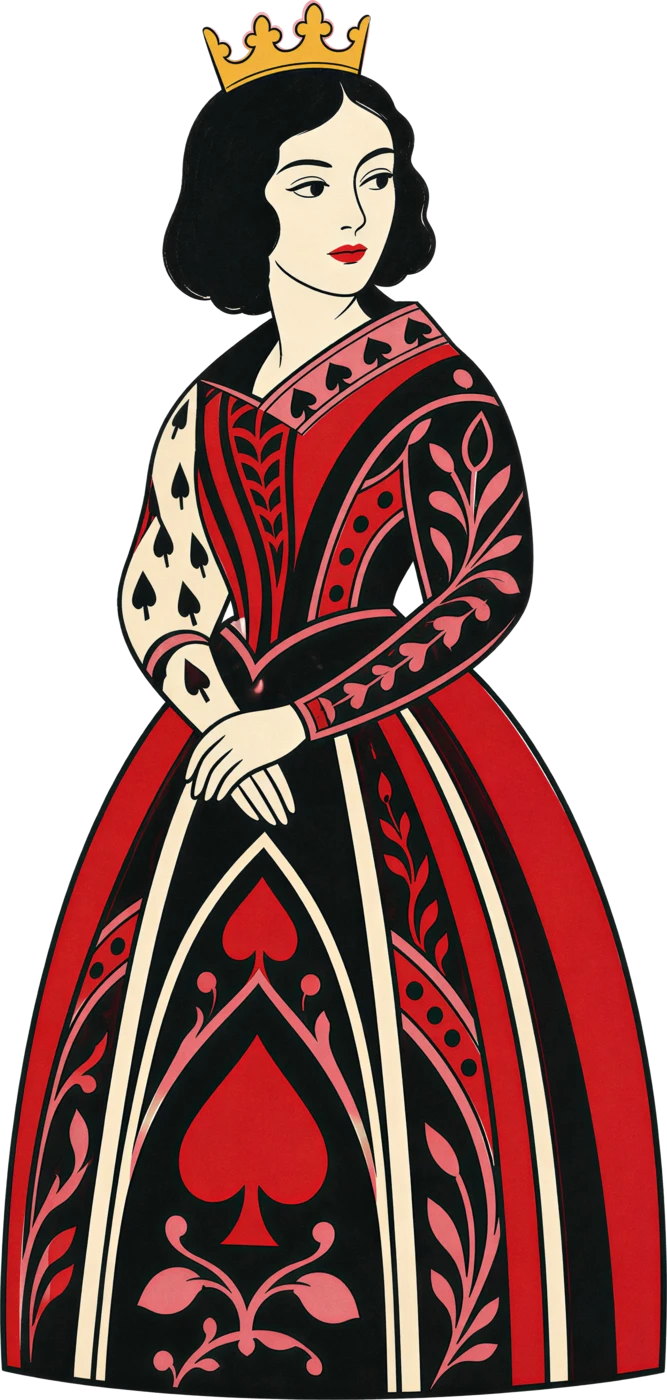
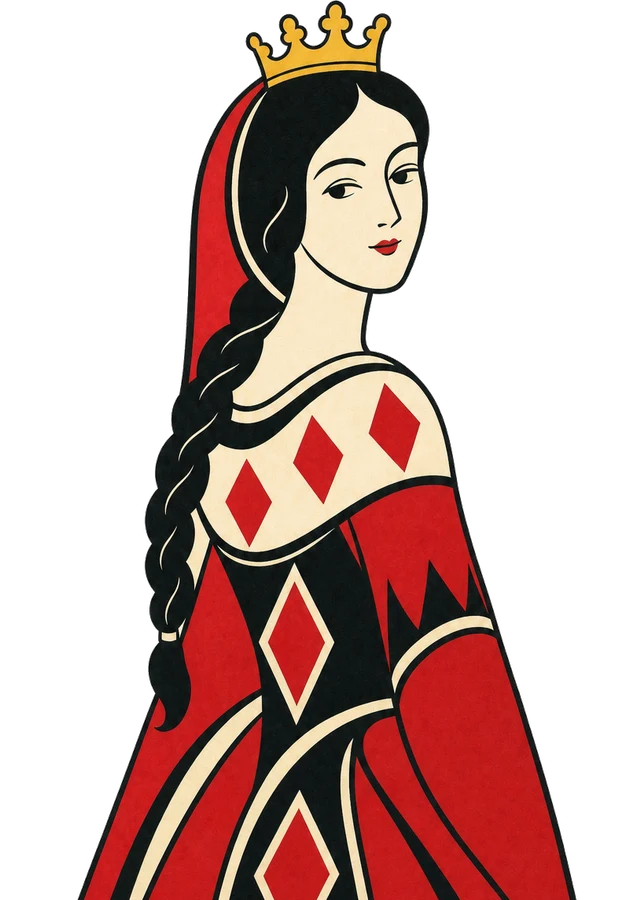
Here there are four face cards and one of them does not exist in your deck: the queen. The order is jack, queen, king and ace. The Spanish sota looks like the jack but sits differently, and there is no knight anywhere in this deck.
The deck has 52 cards, not 40. The eights, nines and tens are all there, and those are what make straights possible in the first place.
-
What you bring
The ace counts as one
What happens here
There is no one in this deck. The ace is the highest card there is, above the king, and it only plays small in a single case: the lowest straight of all, ace to five. Everywhere else the ace is on top.
From two to ten, a card is worth the number printed on it. There is nothing to remember: cards are compared, never added.
-
What you bring
One suit outranks the others
What happens here
There is no trump suit. No suit beats another for being that suit, and there is no situation in which spades beat hearts. Five spades and five hearts are worth exactly the same.
Suits count in one way only: five cards of the same suit make a flush, and a flush is a very strong hand. Five of them, not two or three.
-
What you bring
Card values add up
What happens here
Nothing is ever added here. No counting to thirty one, no points, no score. You make a five card hand and compare it, whole, against the other one.
That is why an ace with a four is not a good hand just because there is an ace in it. What counts is not the single card, it is what the cards make together.
-
What you bring
Your cards are your hand
What happens here
In mus you look at your four cards and you know what you have. Here you get two, and five more go face up in the middle for everybody. Your hand is the best five of those seven, and sometimes it includes neither of yours.
Which means what you have changes every time a card falls. The same two cards can be the best hand at the table and, two cards later, be nothing.
-
What you bring
Two pair beats three of a kind
What happens here
Here it is the other way around: three of a kind sits above two pair. If you come from mus this is the first one to turn around, and it is the one that costs the most.
And there is a single ranking for the whole game. No separate rounds with their own order, and nothing is announced out loud: the cards speak for themselves at the end of the hand.
-
What you bring
Backing out costs you
What happens here
In mus, if you bet and get raised, backing down costs you what you had already bet plus your face in front of the table. Here folding costs you not one chip more than you had already put in, shows nobody your cards and says nothing about you.
More than that: folding is the most used action in poker. Few hands are played and many are given up, and that is not cowardice. That is the game.
-
What you bring
Applying pressure means going for everything
What happens here
Here you bet whatever size you want, hand by hand and street by street. There is no fixed price, and putting all your chips in is one option among many rather than the only way to press.
And when somebody does put everything in, the match is not on the line. One hand is. Whatever they win, they are still sitting there afterwards.
The cards, one by one
The full equivalence, worth having to hand the first time you sit down.
| Spanish deck | Poker deck | What to do with it |
|---|---|---|
| As | A, the ace | No longer worth one. The highest card there is. |
| Rey | K, the king | Second from the top, just below the ace. |
| Does not exist | Q, the queen | A new card for you. It goes between jack and king. |
| Caballo | Does not exist | No equivalent at all. Forget it. |
| Sota | J, the jack | Similar, but it is the lowest of the four face cards. |
| Two to seven | Two to seven | The same, and worth the number on them. |
| Do not exist | Eight, nine and ten | Three new cards per suit. These are what make straights possible. |
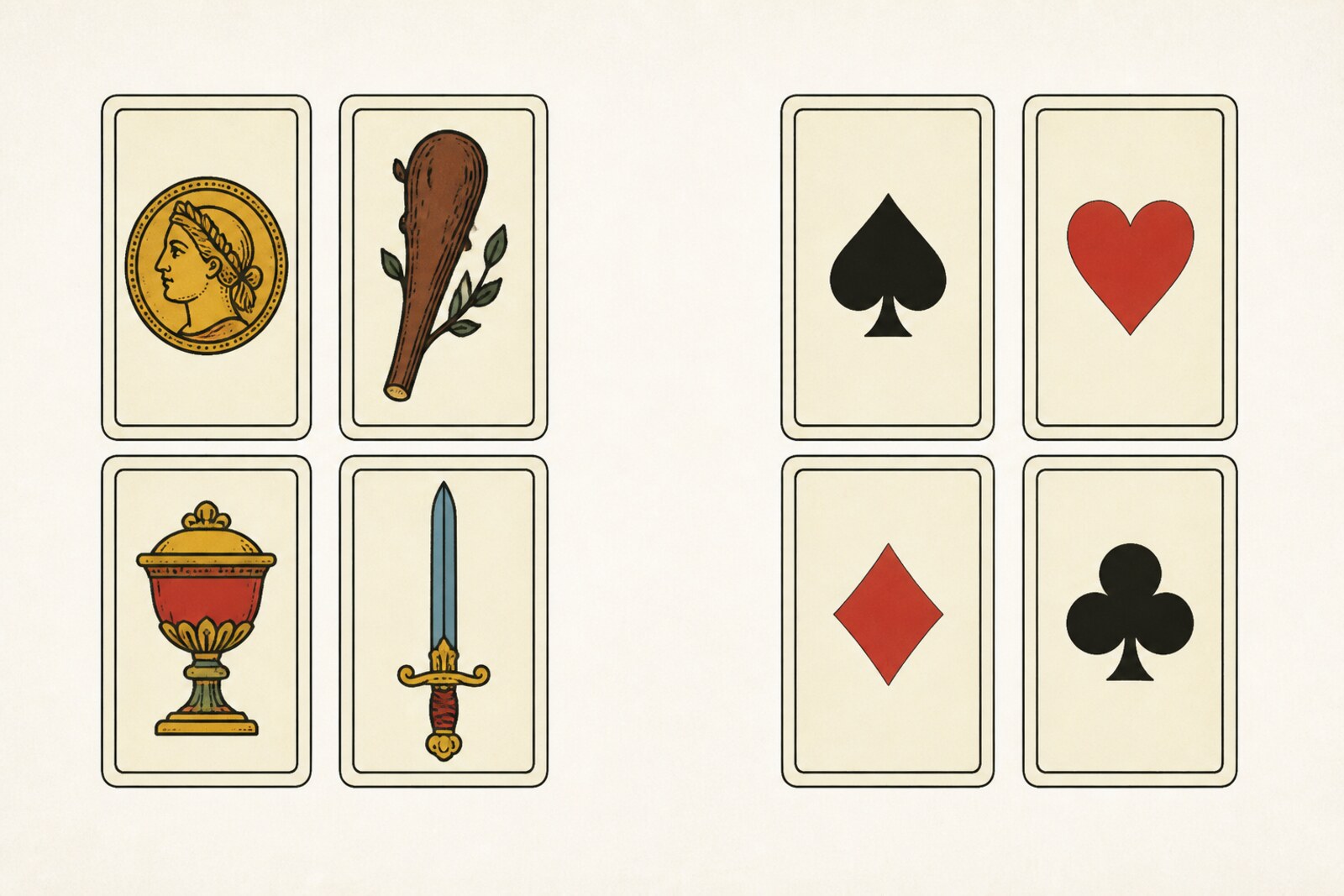
| Oros, copas, espadas, bastos | Diamonds, hearts, spades, clubs | Four suits here too, and none outranks another. |
What does not change
The part that will feel familiar is the part everyone else finds hard. In poker you bet four times per hand, and each time you know a little more than before. That is betting with more information, and you have been doing exactly that for years. All that is really new is the deck and the ranking. The rest you already brought with you.
The rest is learned by playing
Eight facts take ten minutes to read and two hands to forget. What fixes them is sitting down and getting them wrong a few times in a row, at no cost, with something telling you why.
A course from zero, no money and no casino.